Local navigation in cluttered environments often suffers from dense obstacles and frequent local minima. Conventional local planners rely on heuristics and are prone to failure, while deep reinforcement learning (DRL)-based approaches provide adaptability but are constrained by limited onboard sensing. These limitations lead to navigation failures because the robot cannot perceive structures outside its field of view.
In this paper, we propose DreamFlow, a DRL-based local navigation framework that extends the robot's perceptual horizon through conditional flow matching (CFM). The proposed CFM-based prediction module learns probabilistic mapping between local height map latent representation and broader spatial representation conditioned on navigation context. This enables the navigation policy to predict unobserved environmental features and proactively avoid potential local minima.
Experimental results demonstrate that DreamFlow outperforms existing methods in terms of latent prediction accuracy and navigation performance in simulation. The proposed method was further validated in cluttered real-world environments with a quadrupedal robot.
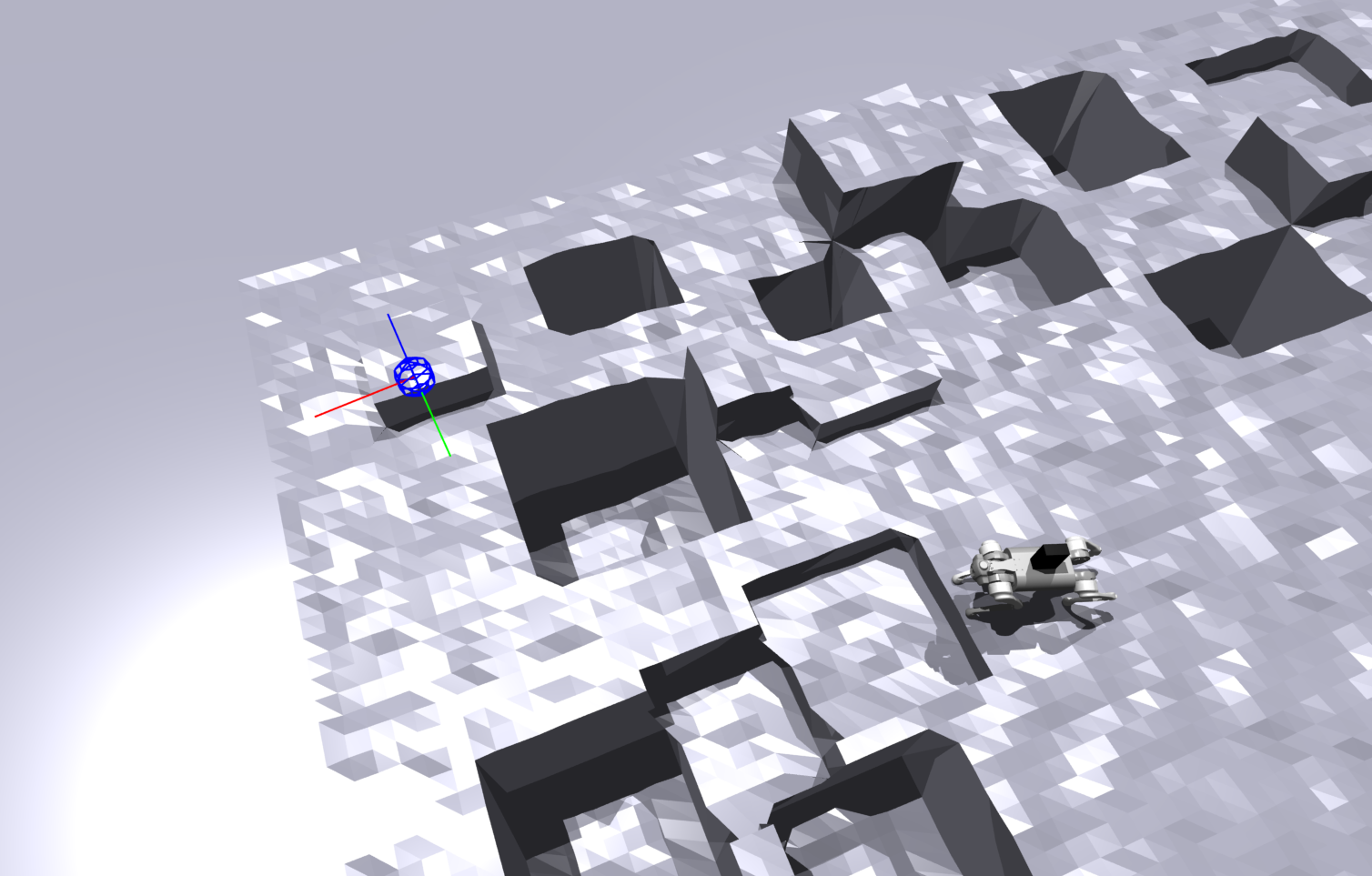
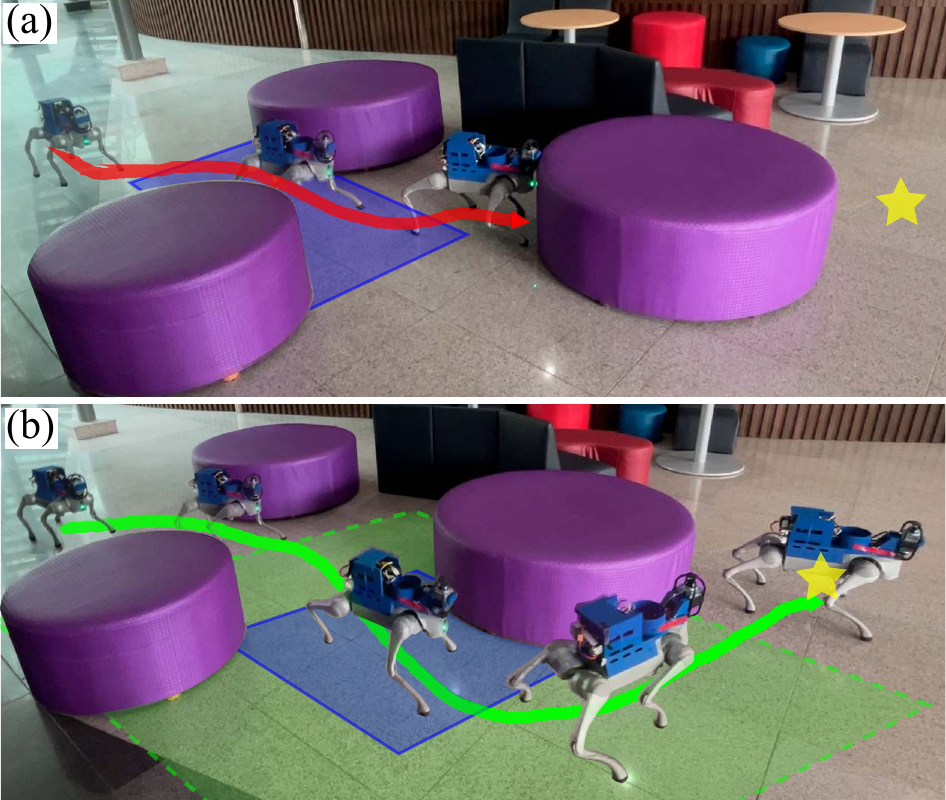
DreamFlow predicts terrain beyond the sensor range, enabling collision-free navigation where the baseline fails.
Baseline
DreamFlow (Ours)
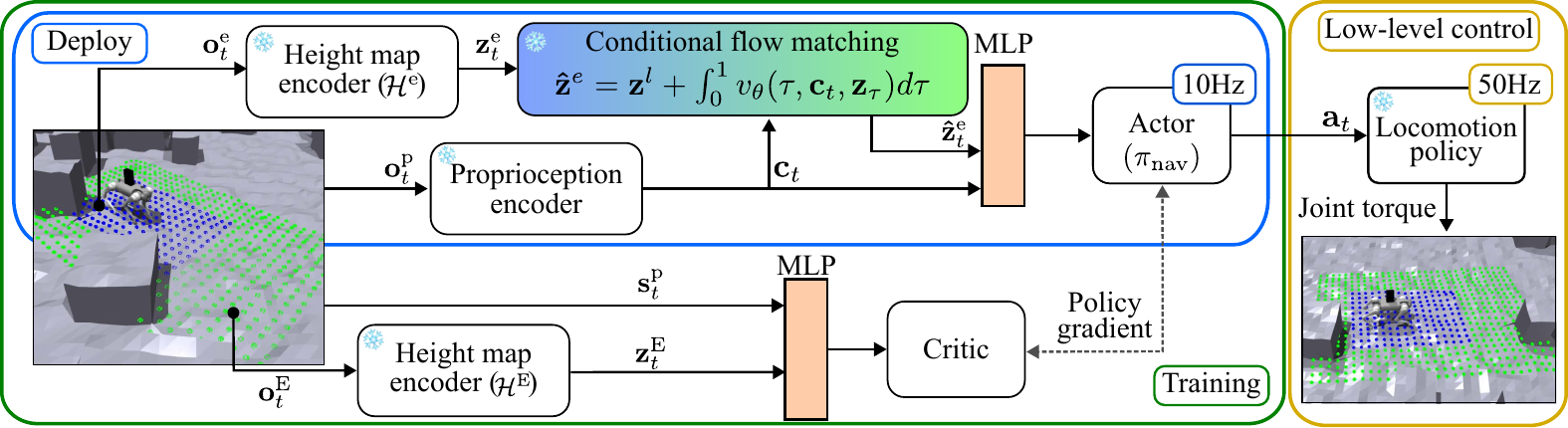
The overall architecture of DreamFlow is designed as an asymmetric actor-critic framework. The actor uses a local height map to derive a local environmental latent representation. The pre-trained CFM module then predicts an extended latent vector—representing terrain beyond the sensor range—conditioned on the robot's proprioceptive context. The navigation policy takes both the local and predicted extended latent as input to produce velocity actions, while a pre-trained locomotion policy serves as a low-level controller.
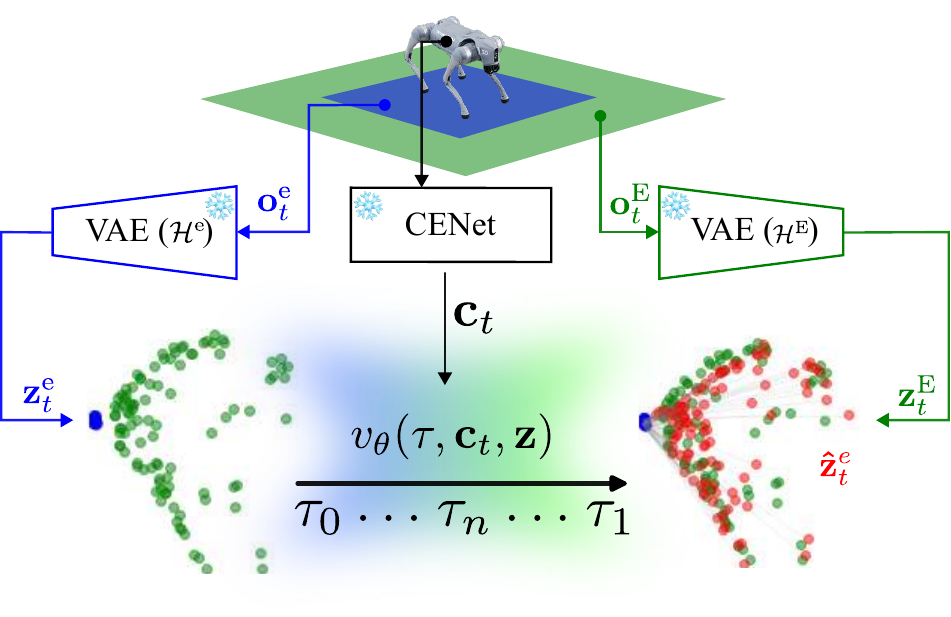
The CFM training pipeline collects latent pairs from local and extended height maps using pre-trained VAE encoders. The velocity field learns to transport the local latent towards the extended latent, conditioned on the proprioceptive context. This enables the model to "dream" about unseen terrain from partial observations.
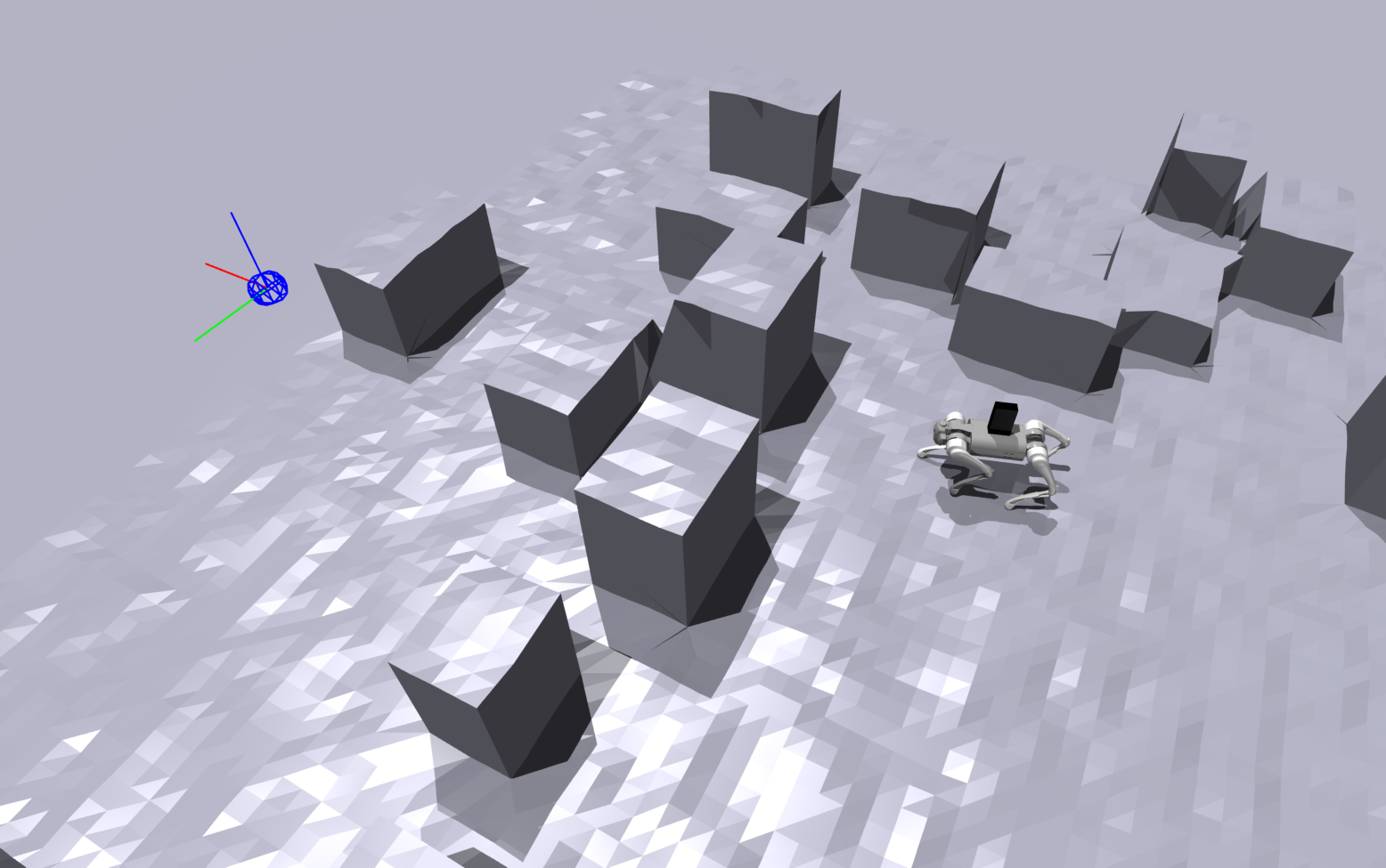
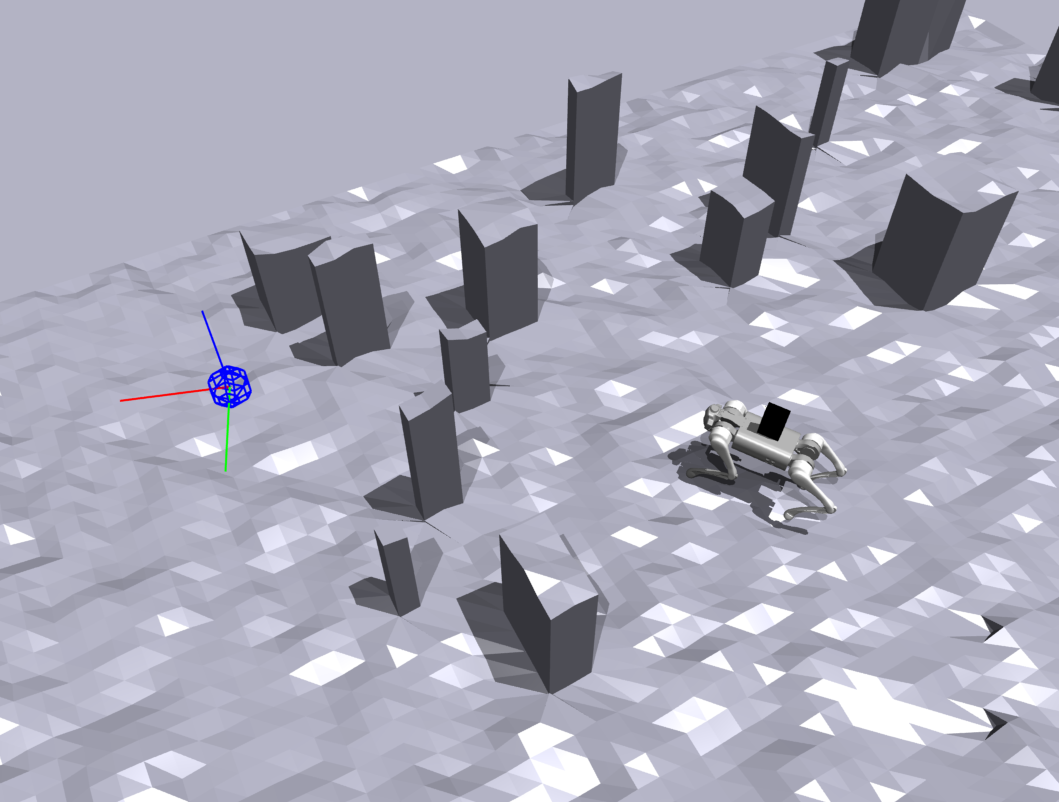
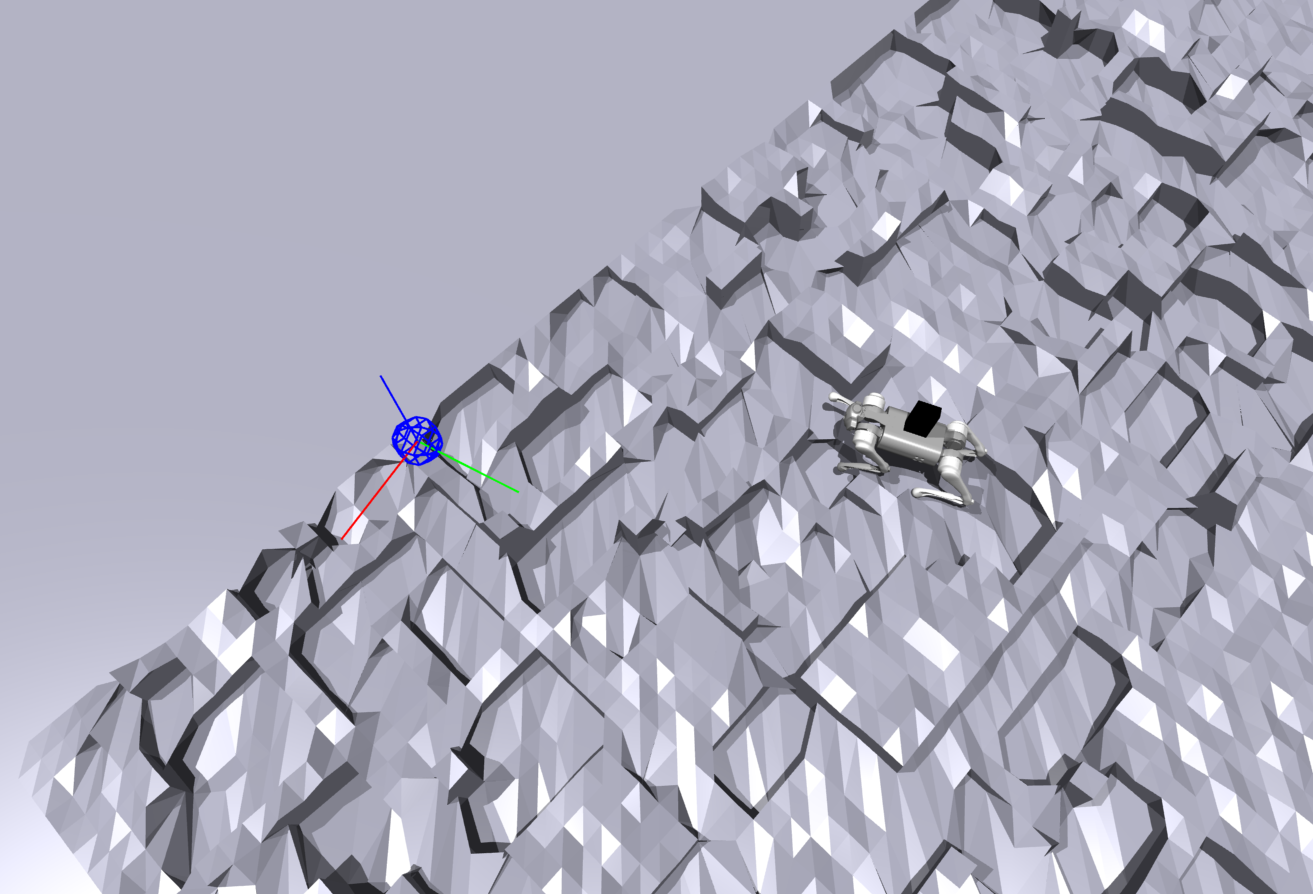
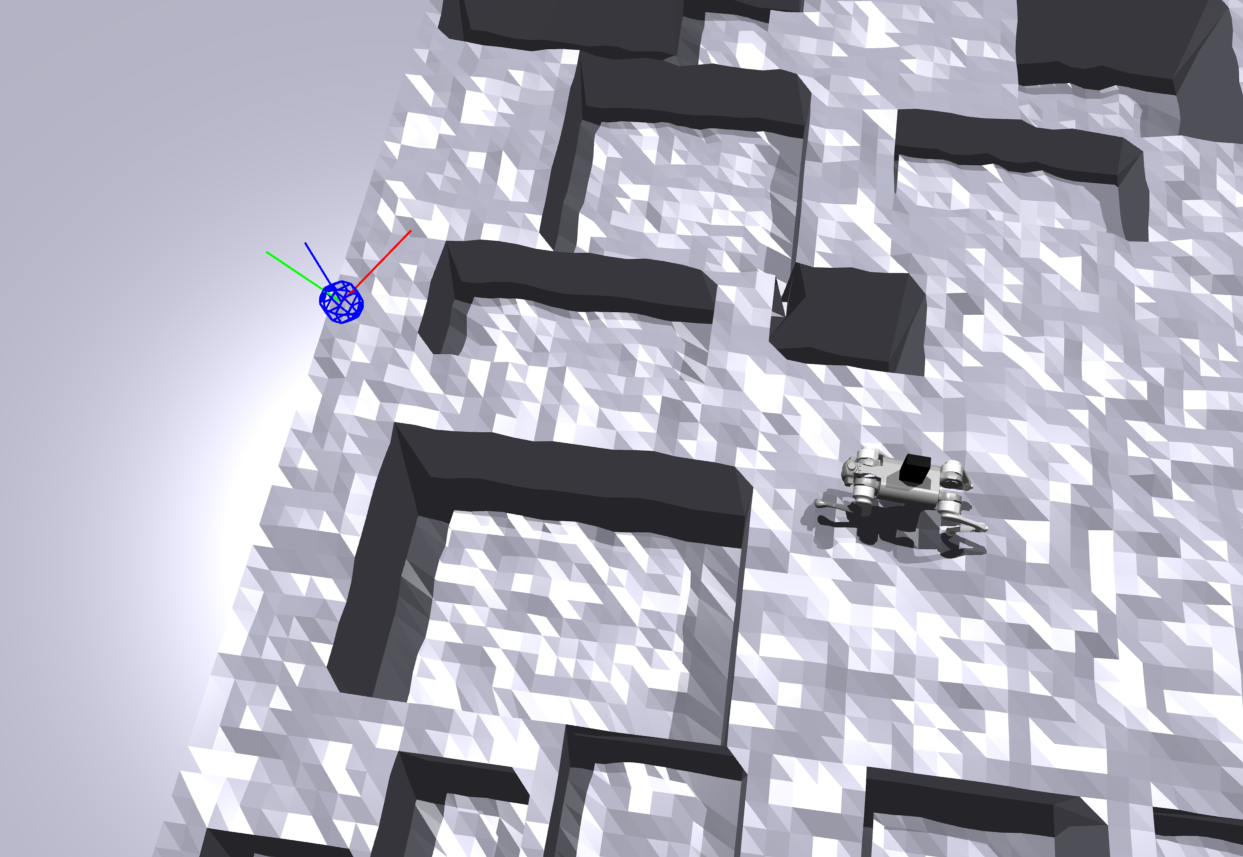
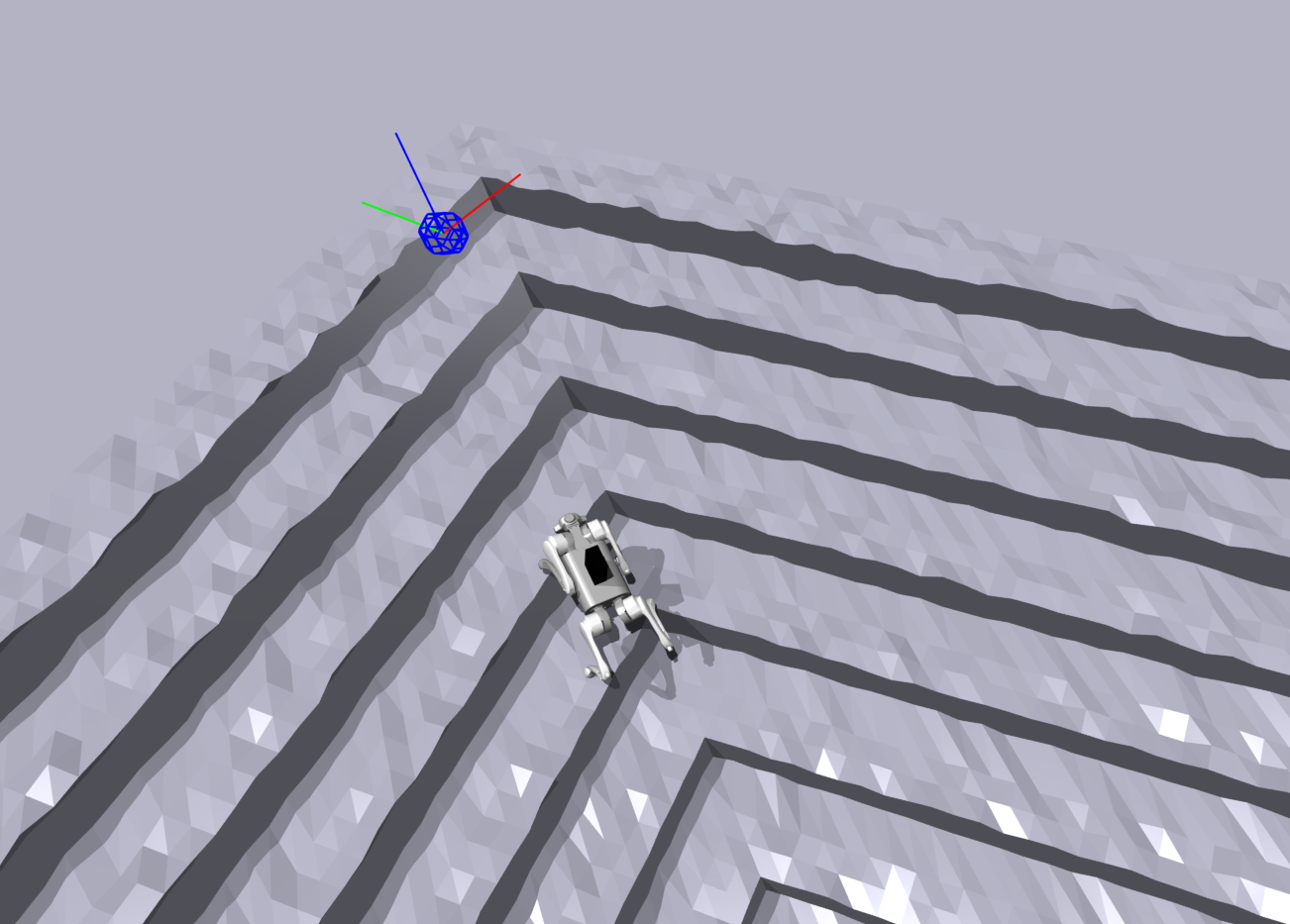
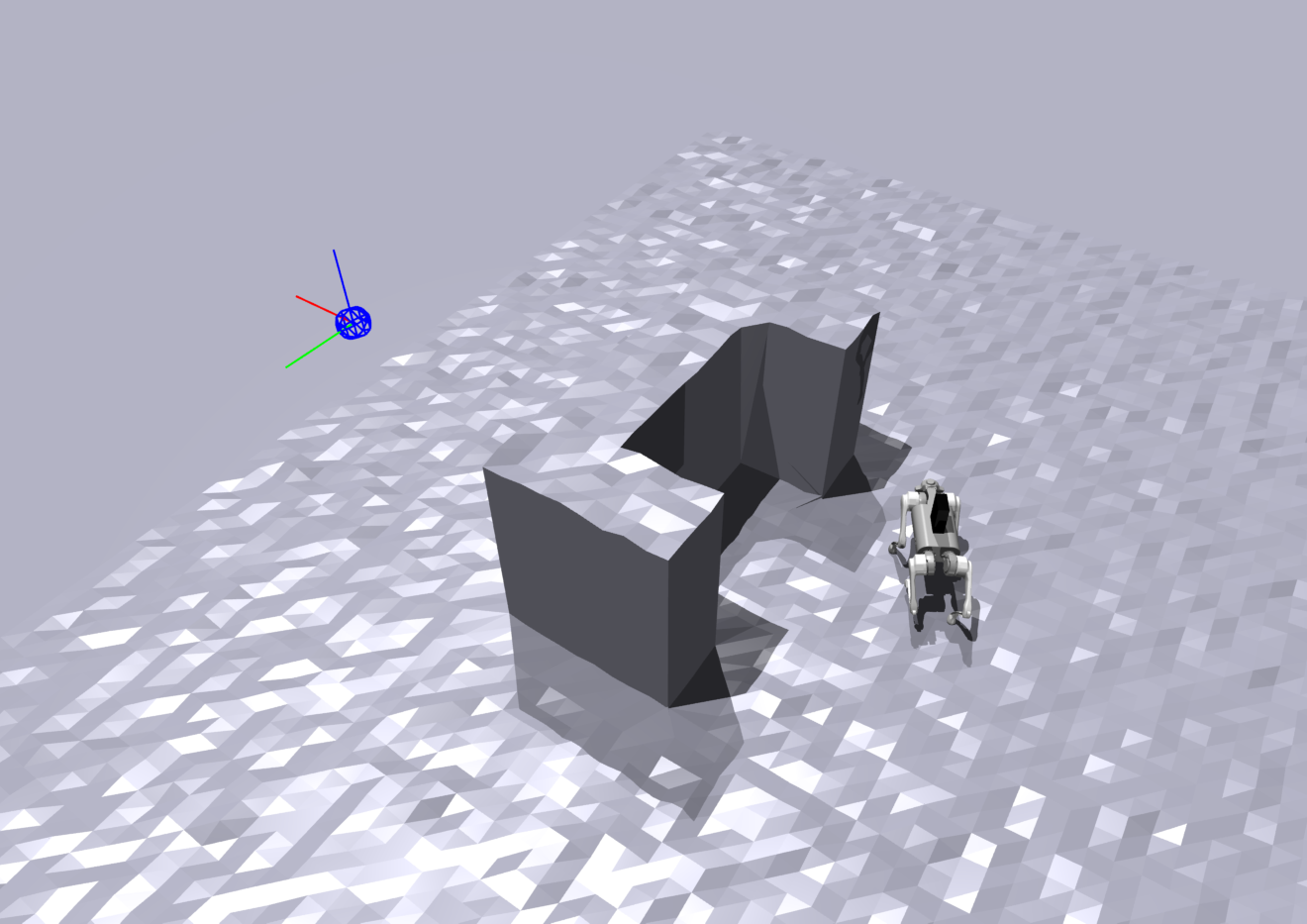
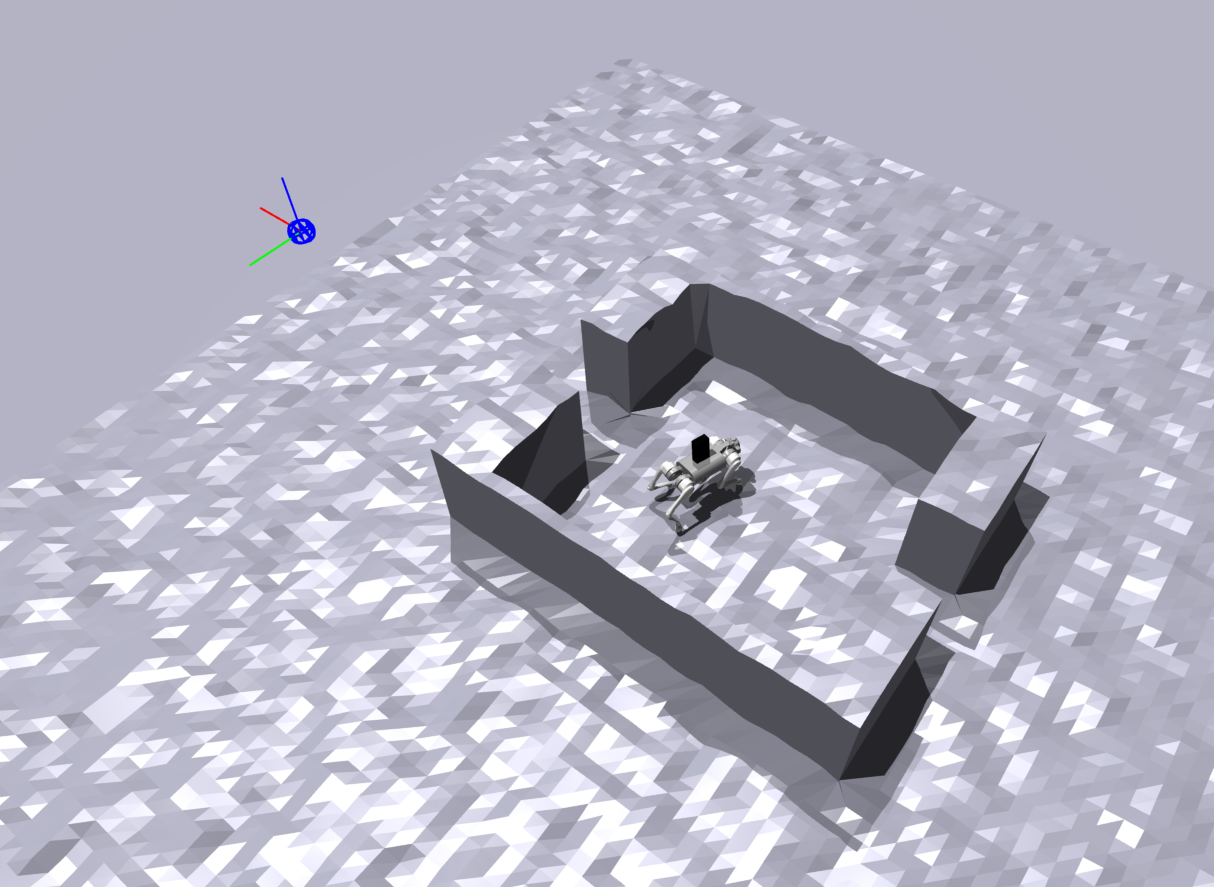
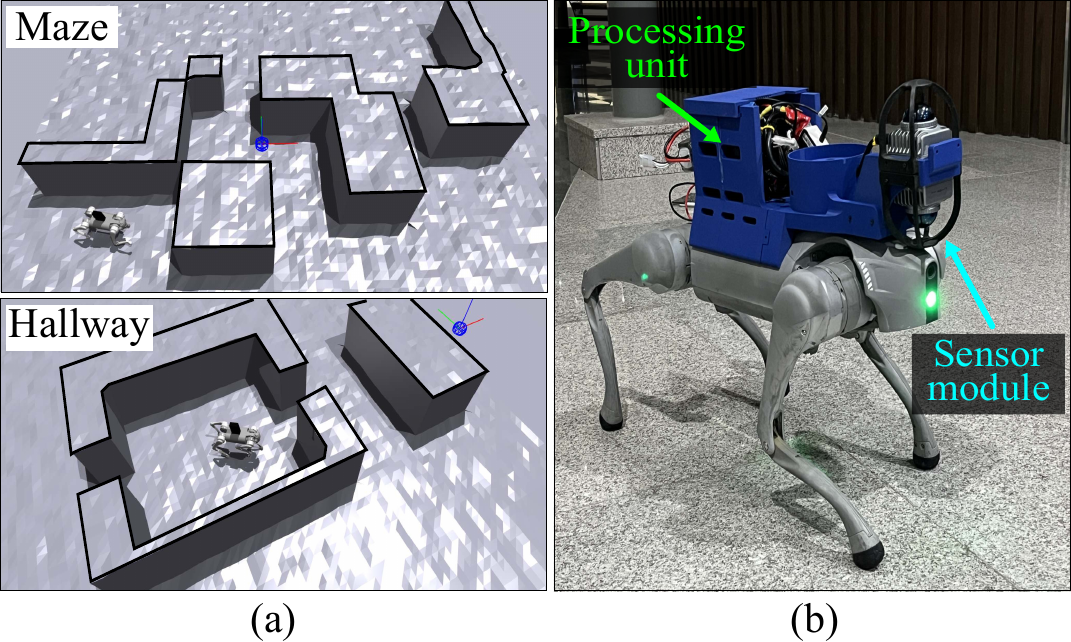
The simulation environment was built using IsaacGym. During training, obstacles of varying sizes are randomly distributed on a flat terrain. We designed two evaluation environments—Maze and Hallway—to test the robot's ability to avoid local minima and navigate through confined spaces.
DreamFlow extends the robot's perceptual horizon by predicting latent representations of terrain beyond the onboard sensor range. Below we visualize the local height map (limited sensor range), extended height map (privileged ground truth), and the combined visualization.
Local Height Map
Extended Height Map
Combined Visualization
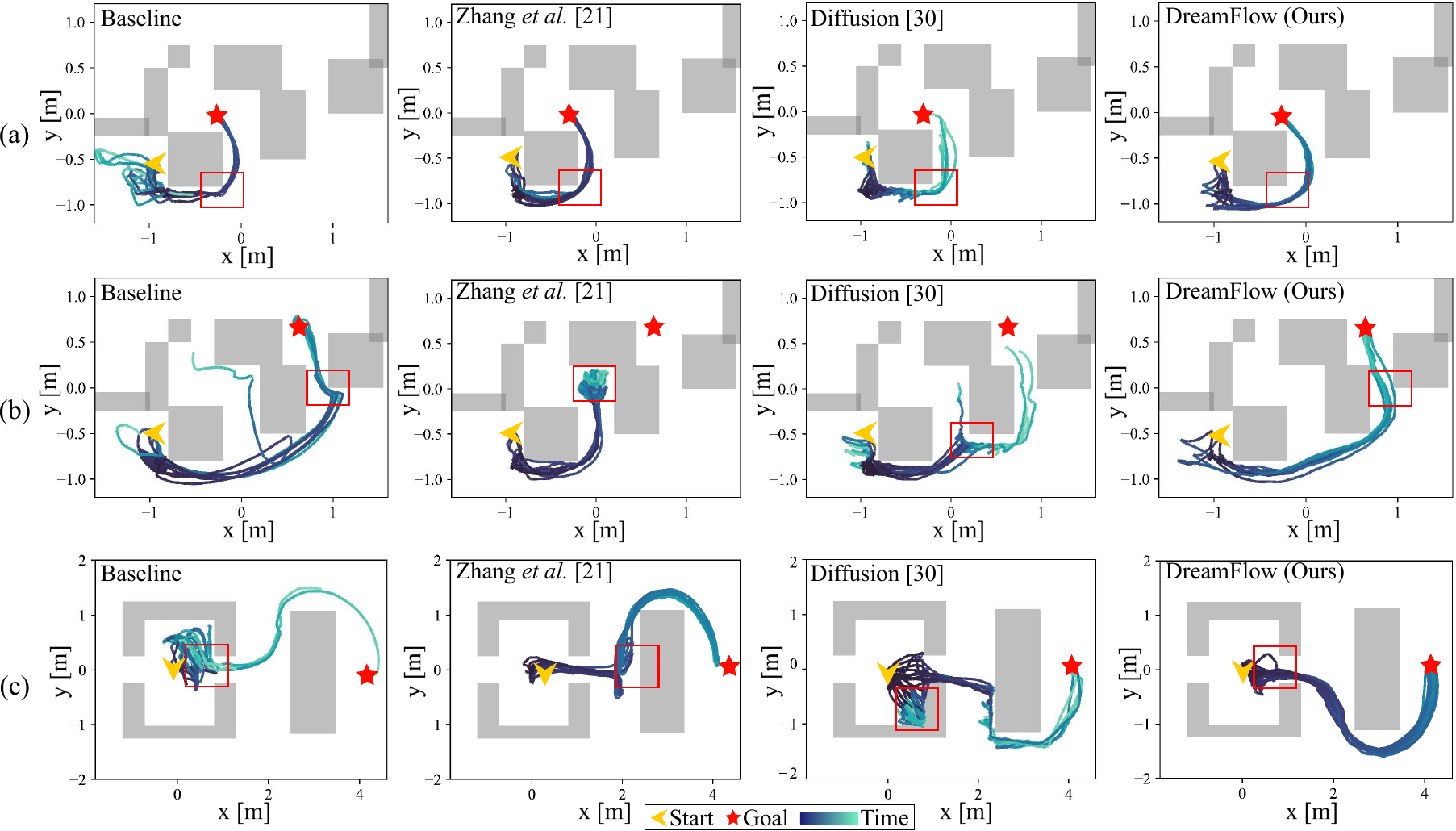
We compared DreamFlow against three baselines across Maze (Easy/Hard) and Hallway environments. DreamFlow achieves the highest success rate (SR) and lowest collision rate (CR), demonstrating its ability to avoid local minima and collisions.
| Method | Maze (Easy) | Maze (Hard) | Hallway | ||||||
|---|---|---|---|---|---|---|---|---|---|
| SR↑ | SPL↑ | CR↓ | SR↑ | SPL↑ | CR↓ | SR↑ | SPL↑ | CR↓ | |
| Baseline | 83.2 | 0.23 | 3.9 | 76.5 | 0.37 | 54.8 | 35.8 | 0.21 | 5.1 |
| Zhang et al. | 95.3 | 0.33 | 2.5 | 5.4 | 0.03 | 15.6 | 25.1 | 0.12 | 4.9 |
| Diffusion | 88.4 | 0.28 | 3.1 | 68.9 | 0.32 | 43.9 | 33.9 | 0.19 | 23.6 |
| DreamFlow (Ours) | 99.6 | 0.35 | 0.9 | 83.1 | 0.45 | 8.9 | 89.8 | 0.58 | 2.3 |
DreamFlow demonstrates smoother trajectories with better obstacle avoidance and more efficient path selection. Other methods show frequent obstacle contacts and often get stuck in local minima.
We validated DreamFlow on a Unitree Go2 quadrupedal robot equipped with two Livox Mid-360 LiDARs. We tested in two real-world environments: a narrow corridor with tight passages, and a cluttered environment with box obstacles and wall segments.
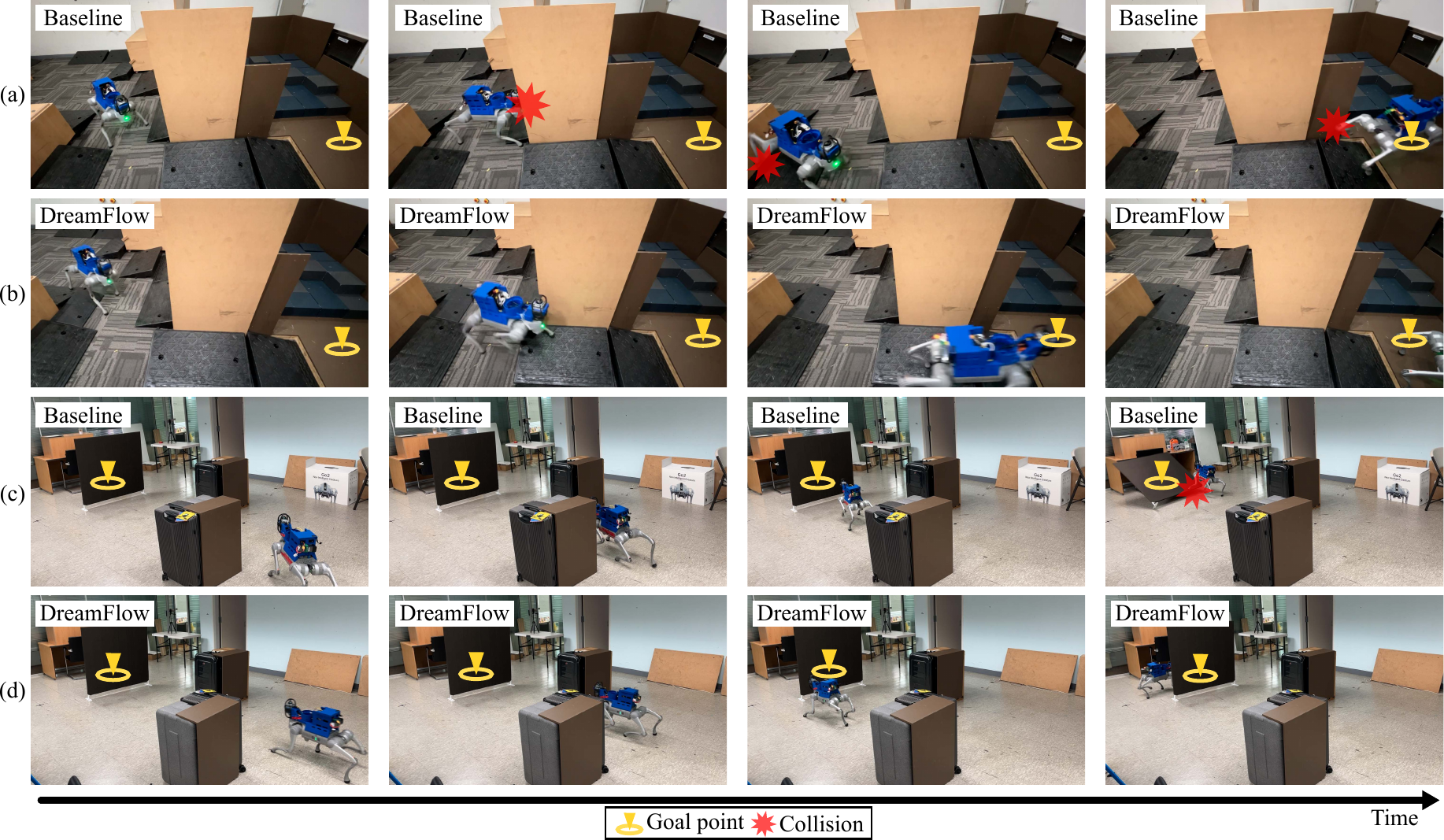
The baseline frequently collides with walls at corners, while DreamFlow achieves collision-free navigation by anticipating corridor layouts beyond its immediate perception.
Baseline
DreamFlow (Ours)
Side-by-side comparison from two camera angles in a corridor environment.
Baseline (Cam 1)
DreamFlow (Cam 1)
Baseline (Cam 2)
DreamFlow (Cam 2)
In cluttered environments with box obstacles and wall segments, DreamFlow successfully navigates without collisions through predictive terrain modeling.
Baseline
DreamFlow (Ours)